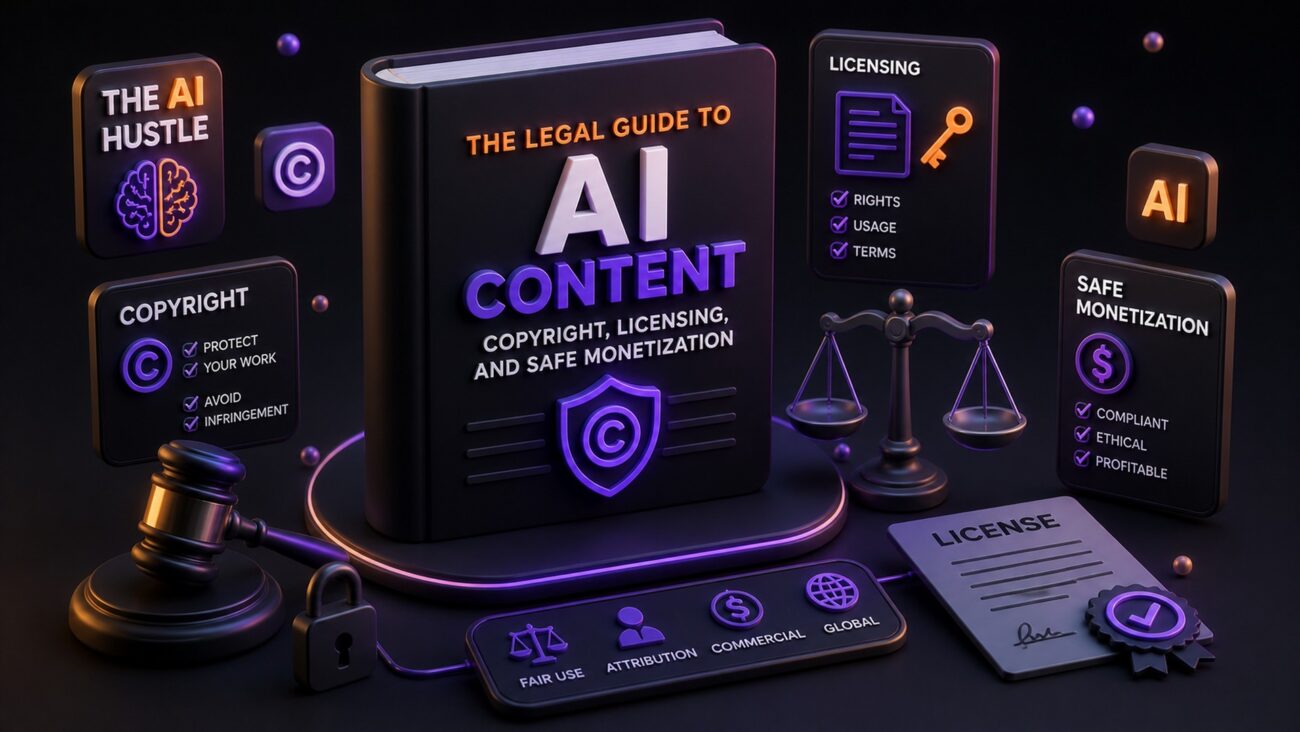
Can You Legally Own Your AI Creations?
As we move further into 2026, the question of «Who owns the prompt?» has become a central pillar of the creator economy. For members of Creator Hits Academy, understanding the legal landscape is not just about safety—it’s about ensuring your revenue streams are protected.
Whether you are generating tracks in Suno AI v5.5 or visuals in Midjourney v7, here is the current legal reality of AI-generated content on the global market.
1. The «Human Authorship» Requirement
In the United States and many Western jurisdictions, copyright protection is currently granted only to works created by humans.
Pure AI Output: A raw, unedited track or image generated by a single prompt may not be eligible for copyright registration in your name.
The «Human-in-the-Loop» Rule: To claim full ownership, you must demonstrate «substantial human creativity.» This includes advanced prompt engineering, manual editing, neural stem mixing, or combining multiple AI assets into a unique composition.
2. Platform-Specific Commercial Rights
Your right to sell AI content depends entirely on your subscription tier at the moment of generation.
AI Music (Suno & Udio):
Pro/Premier Tiers: Usually grant you full commercial rights to the songs you generate. You can upload these to Spotify, Apple Music, or use them in commercial advertisements.
Free Tiers: Typically strictly for non-commercial use. Selling music made on a free account is a violation of the Terms of Service and can lead to account termination and legal claims.
AI Visuals (Midjourney):
Paid subscribers own the assets they create, though the images remain part of the public gallery unless «Stealth Mode» is activated.
3. The «Safe Monetization» Checklist
To build a 6-figure business without legal headaches, follow these Creator Hits Academy standards:
Keep Records: Always save your prompts and the version of the AI model used (e.g., Suno v5.5).
Transform the Output: Don’t just sell the raw file. Mix the audio, add your own vocals, or use AI-generated visuals as part of a larger design project.
Check for «Sound-Alikes»: Avoid prompts that explicitly name famous artists (e.g., «Sing like Taylor Swift»). Modern AI filters usually block this, but «style-cloning» can still lead to «Right of Publicity» claims.
4. How to License Your AI Work
If you are selling prompt books or custom tracks through creatorhitsacademy.com, transparency is your best marketing tool.
Provide a Commercial Use License with every purchase.
Clearly state that the prompts are engineered to produce unique results that comply with current platform guidelines.
Build Your Empire on Solid Ground
The legal world is still catching up to the speed of AI, but the winners will be those who play by the rules today. At Creator Hits Academy, we provide you with the tools to create not just «content,» but assets that you can legally monetize.
Want to learn more about professional AI workflows? Check out our latest guide on Suno AI v5.5 Mastery.
[Link: Explore our Premium AI Licensing Kits]
This article is for informational purposes and does not constitute legal advice.
